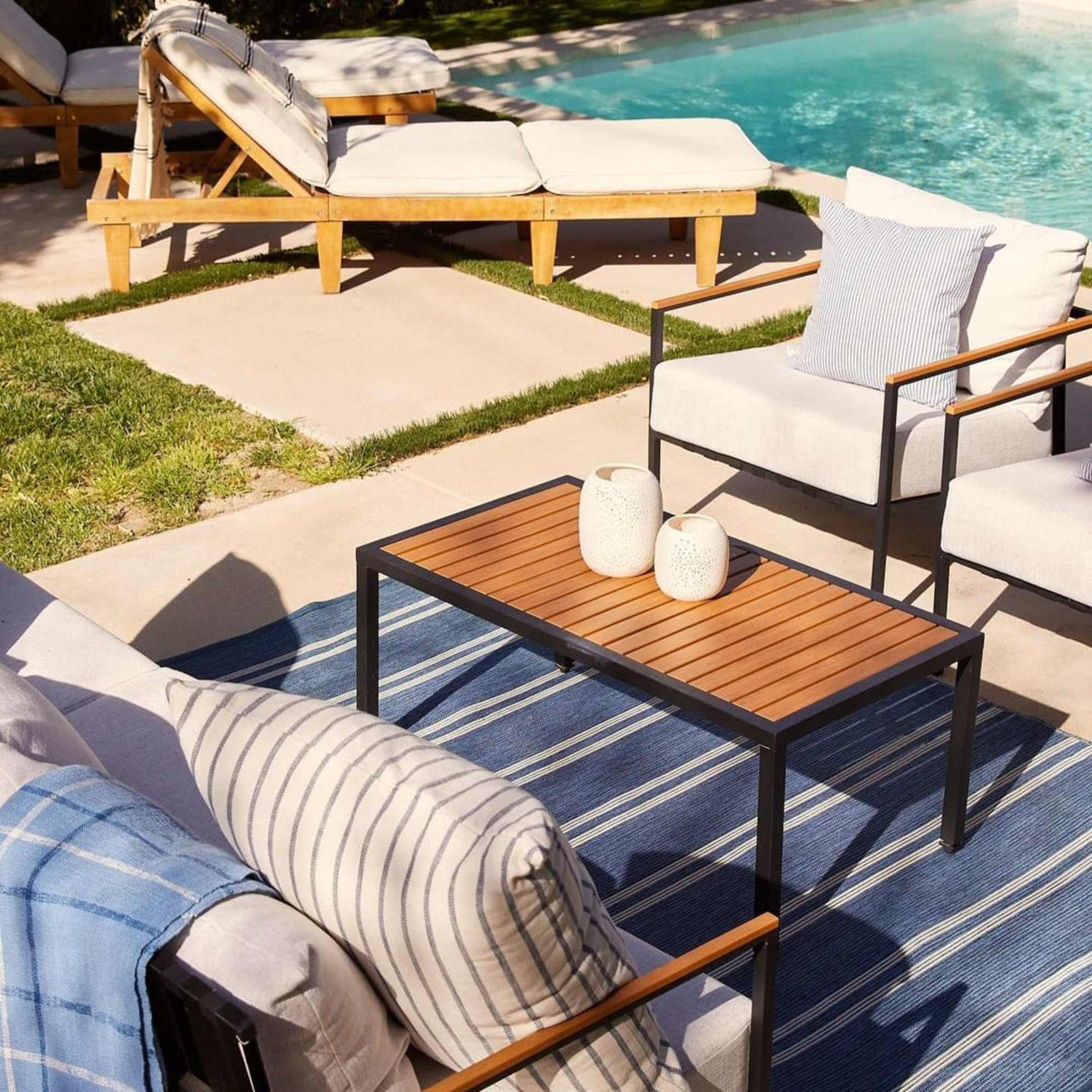
How To Mix & Match Patio Furniture
Curating an outdoor space is rarely a one-and-done deal. It’s more of a “one chair now, an outdoor dining table later, maybe an impulse-buy outdoor sofa after that” situation. Learning how to mix and match outdoor furniture is really about convincing a collection of strangers to look like a planned family, with materials, colours, and silhouettes quietly doing the work.
Why does mixing patio furniture actually work?
Mixing pieces gives you the freedom to evolve as your guest list (or your taste) grows. Outdoor spaces should feel like an escape, not a rigid furniture showroom.
Key benefits of mixed patio furniture:
Adds instant character without the "set in stone" commitment
Lets you build around the favourites you already own
Feels more relaxed than a stiff, matching outdoor set
Allows your space to evolve with your needs
How do you combine different styles without clashing?
You don’t need everything to match. You just need an anchor to lead the conversation and prevent a chaotic mismatch.
Quick approach to mix and match outdoor furniture:
Start with one anchor piece, like an outdoor sofa or dining table
Bring in contrasting styles that feel related, not random
Soften sharp lines with texture for a relaxed, inviting vibe
If you’re still figuring out how to choose patio furniture, it helps to start by thinking about how you actually use your space.
Which materials work well together outdoors?
Using the same material everywhere can make an outdoor space feel flat. Mixing materials adds depth and keeps things interesting—as long as you let one set the tone.
Material pairings for mismatched patio furniture:
| Material combination | Why it works | Best for |
|---|---|---|
| Wood and metal | Warm, sturdy, and grounded. Structure without the stiffness. | Dining areas, statement seating |
| Resin wood with woven seating | Durable enough for daily use, with just the right amount of texture | Lounge zones, conversation areas |
| Aluminium with wicker | Light, breezy, and easy to live with. Open, not bulky. | Compact patios, balconies |
These combinations give you durability without sacrificing the lived-in ease that makes outdoor spaces feel inviting rather than precious.
How many colours should you use outdoors?
Short answer: Fewer than you think. Colour is where patios tend to spiral. One too many cushions, and suddenly your calm outdoor escape looks like it lost a fight with a paint store.
A colour formula for mix and match patio furniture ideas:
One main neutral to do the grounding (think charcoal, sand, weathered grey)
One secondary tone to keep things interesting (terracotta, deep green, warm ochre)
One accent colour for cushions or small details (rust, navy, soft blush)
This gives you personality without committing to a colour scheme you'll regret halfway through. The restraint is what makes outdoor patio set ideas feel intentional rather than accidental.
Do accessories make a difference?
Yes. They’re the difference between “I dragged this outside” and “I meant to do this.”
They do a few important jobs:
Repeat colours across different outdoor furniture so things feel intentional
Smooth the transition between styles that don’t naturally get along
Add personality without crowding the space
You don’t need many. A few thoughtful details are enough to turn mixed patio furniture into a space that feels intentional.
Quick reference: Mixing patio furniture essentials
| Element | Guideline | Why it matters |
|---|---|---|
| Anchor piece | Start with one substantial item (sofa, dining table) | Sets the visual weight and style direction |
| Material mix | Choose 2-3 complementary materials maximum | Prevents visual chaos while adding depth |
| Colour palette | 1 neutral + 1 secondary + 1 accent | Creates cohesion without monotony |
| Scale variation | Mix larger anchors with lighter supporting pieces | Maintains balance and breathability |
| Accessories | Use sparingly to connect disparate elements | Ties the collection together intentionally |
Ready to take the party outside?
Your backyard called—it’s time for an upgrade. Start with what you love, add what you need, and let the space evolve as you do. The beauty of mix-and-match patio furniture is that it never has to be finished. Just lived in.

Frequently asked questions about mixing and matching patio furniture
Is there a “right” way to mix patio furniture?
Not really, there’s just the version that works for you. When you mix and match outdoor furniture, and it feels comfortable, functional, and easy to live with, you’ve done it right. No rules broken. No design crimes committed. Often, the best ideas come together slowly, shaped by how your patio actually gets used. Weeknight dinners, weekend lounging, and the occasional guest who stays longer than planned.
Is it okay to mix indoor and outdoor furniture?
With caution. Use weather-resistant materials or place indoor pieces under covered areas. Mixing indoor and outdoor can add personality and soften the rigidity of outdoor sets.
How do I mix patterns and textures outdoors?
Think layers, not loud statements. Pair a woven chair with a smooth table, or a striped cushion with a neutral sofa. Texture creates depth, while patterns should be limited to one or two main accents.
