
The Cold Hard Truth: Pros & Cons of a Leather Couch
Sleek, smooth, and unapologetically confident. A leather couch doesn’t just sit in your living room, it owns the room. It catches the afternoon light like it planned it, ages like it has nothing to prove, and makes fabric look like it’s trying too hard.
But let’s be honest, a leather sofa is not a fling purchase. It’s a long-term relationship. And before you commit, you deserve the full story about leather furniture.
We’re going to walk through the real pros and cons of leather, answer the questions people search for at midnight, and help you decide if this is the right match for your home.
Why leather couches have such a loyal following: The pros
Leather has performance, presence, and patience. It doesn’t beg for attention, but it earns it over time. Let’s break down why.
1. Leather ages with character, not damage
Some materials decline, but leather only gets better with age. A high-quality leather piece develops a rich patina over time—a soft sheen and deepening tone that records every nap and movie night. This enhances its character.
This is where the durability of leather furniture stands apart. While many upholstered sofas show their age through sagging fabric and frayed seams, real leather settles in and gets better-looking as it goes.
If you’re wondering how long leather couches last, the honest answer is this: with proper care, a good one can last decades. It’s not unusual for a well-built leather sofa to outlive two fabric replacements and still look composed.
The Hamilton Leather Chaise Sectional Sofa
Picture credits: @ourcoastalhaven_
The Hamilton Leather Chaise Sectional Sofa
Picture credits: @ourcoastalhaven_
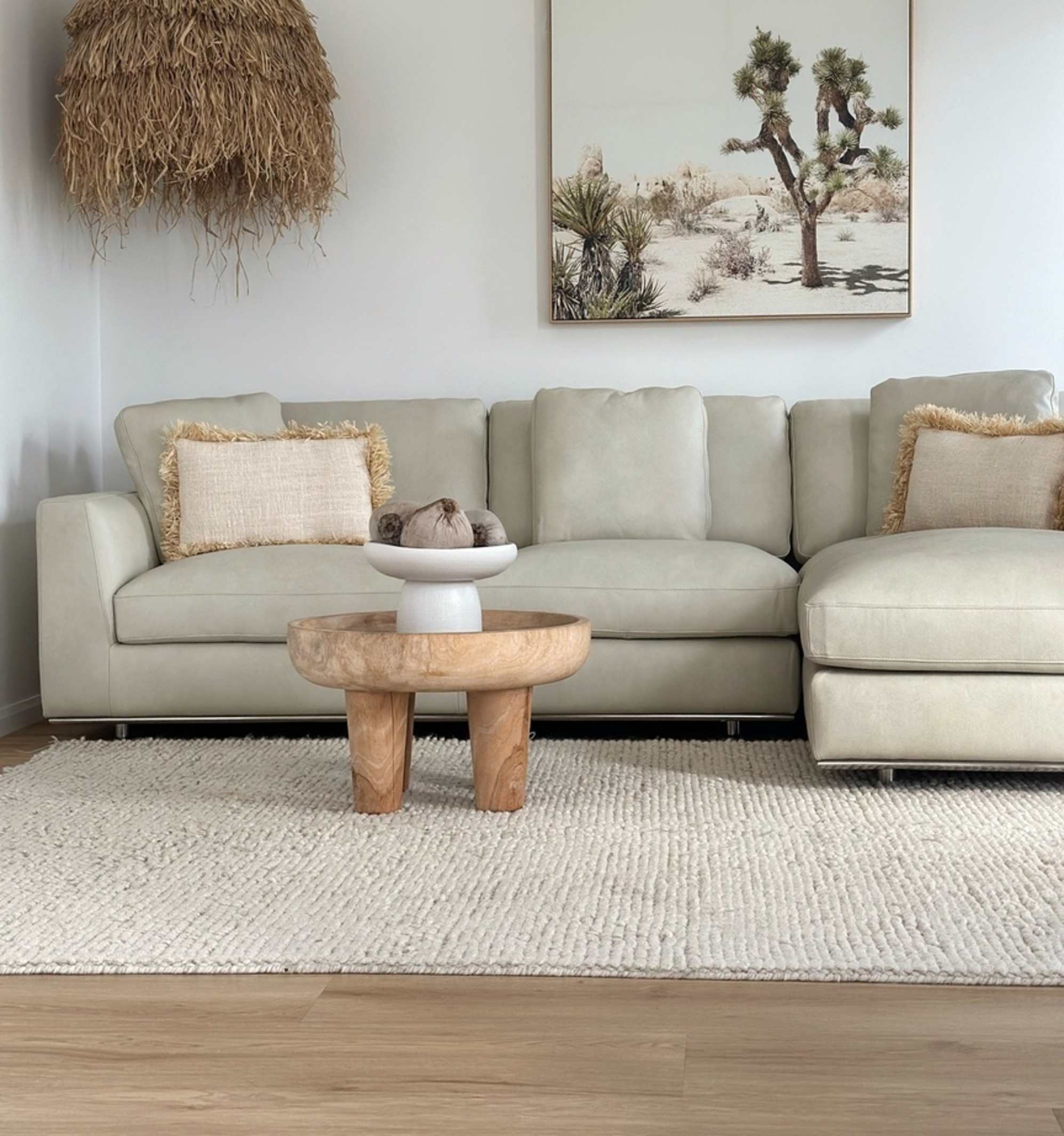
2. Leather is (surprisingly) easy to clean
For the most part, fabric sofas are always one spill away from a permanent stain (unless you're looking at performance fabric).
On the contrary, leather is surprisingly forgiving. Because the surface is less absorbent than most fabrics, many spills sit on top instead of soaking in. A quick wipe often does the job. Routine care is simple: gentle cleaning and occasional conditioning to keep the hide supple.
Compared to many fabric options, leather is also less likely to trap:
Pet hair
Dust
Dander
Odors
For busy households, that alone can tip the scale in the leather sofa pros and cons debate.
3. Leather is breathable and temperature responsive
People often ask: Is leather breathable?
Yes, real leather is breathable because it’s a natural material with a porous structure. It adjusts to your body temperature and the room around it. That’s why it feels warm in cooler weather and gradually adapts as you sit.
Now let’s address the other half of the question: Are leather couches comfortable?
Comfort depends on three things: the leather quality, the cushioning beneath it, and the construction of the frame. When those are done right, a leather couch feels supportive, responsive, and gently yielding. Think tailored comfort, like a well-made jacket.
In hotter climates or sunlit rooms, leather can feel warm to the touch. A breathable throw or light cover solves that without changing the look.
The Isaac Leather Bumper Chaise Sectional Sofa
Picture credits: @mensweardog
The Isaac Leather Bumper Chaise Sectional Sofa
Picture credits: @mensweardog

The Jonathan Leather Extended Sofa with Ottoman
Picture credits: @kateloiseugc
The Jonathan Leather Extended Sofa with Ottoman
Picture credits: @kateloiseugc
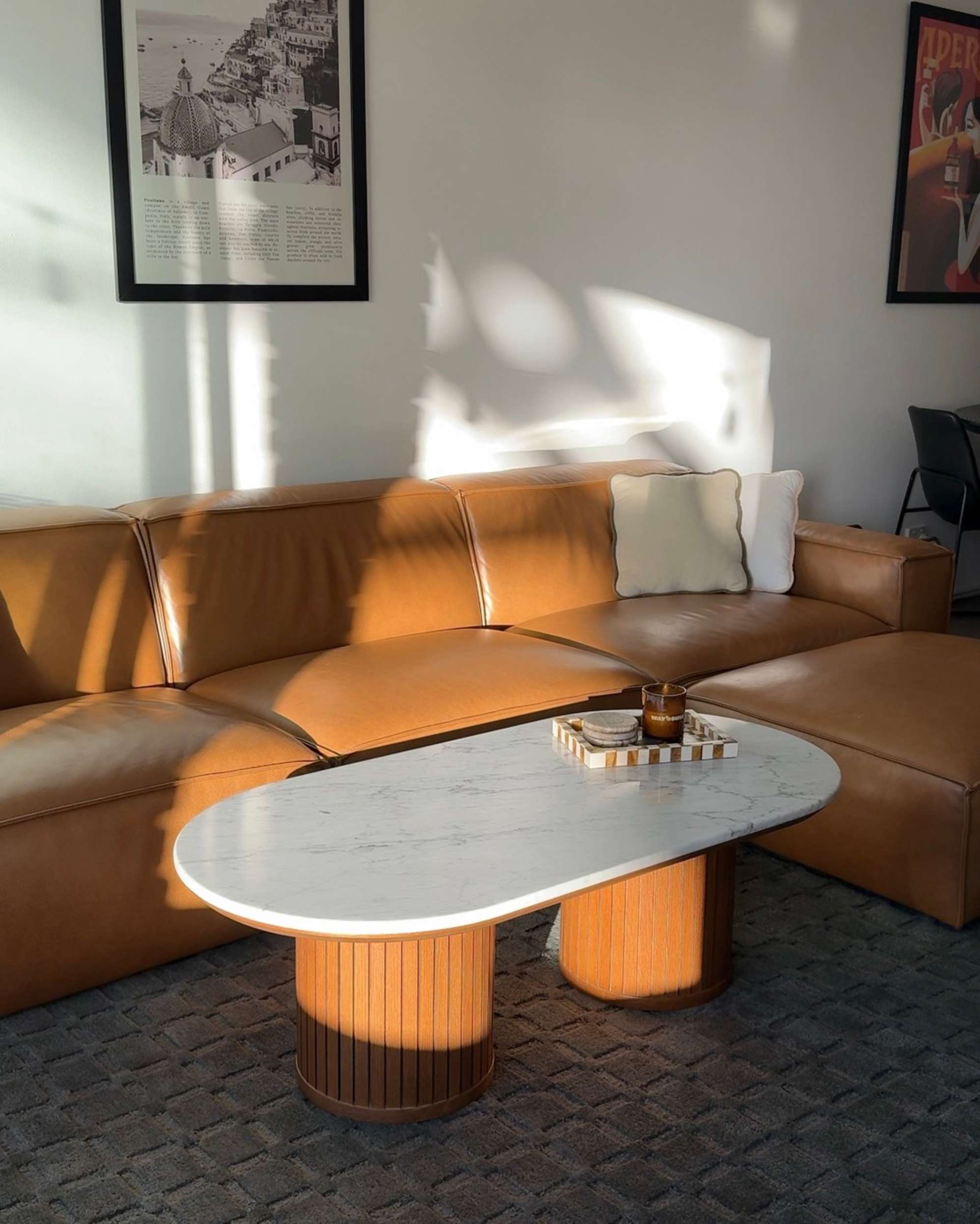
4. Leather brings instant visual authority
A leather couch has the same effect as a perfectly cut coat. It sharpens everything around it. Leather delivers visual depth and tactile richness that flat fabrics struggle to match. Even minimalist spaces feel more grounded with leather in the mix. It reads premium without shouting, which is harder to pull off than it sounds.
If your living room needs a focal point or accent piece, a leather sofa shows up ready.
5. Leather plays well with almost every material
Leather has flair, individuality, and is (above all) the ultimate dance partner for your decor. It’s one of those rare materials that manages to fit with every interior style and colorway imaginable. Change your rug, lighting, or wall color, and your leather couch still makes sense in the room.
It pairs easily with:
Solid wood
Metal accents
Marble and stone
Glass tables
Textured rugs
Woven textiles
Whether you have contemporary décor or a mid-century modern feel, you can style a leather sofa to fit your rhythm.
The Fable Leather Sectional Sofa
Picture credits: @adelainemorin
The Fable Leather Sectional Sofa
Picture credits: @adelainemorin

The Madison Leather Chaise Sectional Sofa
Picture credits: @oakandorange
The Madison Leather Chaise Sectional Sofa
Picture credits: @oakandorange

6. Leather is built for the long haul
Let’s answer this cleanly because it’s one of the most searched questions: how long should a leather couch last?
A well-made real leather sofa with a solid frame and proper care should last 15–25 years, often longer with proper care and maintenance. That’s the durability of leather furniture at work.
Yes, the upfront price can be higher. But, think of the cost of a real leather sofa as a long-term investment rather than a mere purchase. You won’t have the thrill of choosing new furniture as often, but when you consider how a quality piece is built to last for decades, the choice is clear.
What you should know before committing: The cons
We love leather, but we’re not here to pretend it’s flawless. The leather cons matter, especially depending on your climate, habits, and values.
1. Leather is susceptible to strong sunlight
Leather and UV exposure are not best friends. Prolonged direct sunlight can cause fading and uneven color changes, especially with aniline and semi-aniline finishes. If your sofa sits near large windows, plan for:
Sheer curtains or blinds
UV-filtering window films
Rotating cushions where possible
2. Leather might not be the best in humid climates
The kind of moisture leather struggles with is humidity. As a natural material, leather breathes, which means it can also absorb excess dampness. In humid environments, this can invite unwelcome visitors like mold or mildew.
In humid climates, leather performs best when you have:
Good airflow
Air conditioning or dehumidifiers
Ample space between the sofa and the wall for air circulation
3. Leather can scratch
Real leather can show obvious marks from sharp objects and pet claws. Some people see scratches as character, but others see them as heartbreak. Protected leather finishes are more scratch-resistant. Full-grain and top-grain leathers are more natural and can show marks more easily.
It’s not a flaw, but it is a factor.
3. Ethical concerns
One of the most common leather con is ethical sourcing. Leather comes from animal hides, and production methods vary widely in environmental impact and animal welfare standards.
If this matters to you, look for furniture stores that are transparent about:
Sourcing practices
Tanning processes
Supply chain ethics
Responsibly sourced leather exists, but it requires deliberate choice.
At a glance: Pros and cons of leather sofas
| Pros of leather sofas | Cons of leather sofas |
|---|---|
| Ages gracefully, developing a unique patina over time. | Susceptible to fading if there is prolonged sun exposure. |
| Easy to clean and maintain, resistant to spills and stains. | Leather may crack if not conditioned regularly. |
| Provides a luxurious aesthetic and complements various materials. | Not ideal for humid climates, prone to mold and mildew. |
| Breathable and comfortable. | Can raise ethical concerns regarding animal welfare and sustainability. |
| Durable and long-lasting. |
Is a leather couch right for you?
A leather couch is a long-term design decision and a daily-use tool. It will host your guests, your sick days, and your celebrations. It will see more of your real life than most furniture ever does.
If you want longevity, tactile richness, and a piece that improves with age, leather makes a compelling case. If you prefer lower upfront cost, zero animal products, or a softer, fabric-forward feel, other materials may suit you better.
The smartest homes are not built on trends. They’re built on honest choices. And now you’ve got the cold, hard truth to make yours.

Frequently asked questions about the pros and cons of leather couches
What are the disadvantages of leather furniture?
Leather can feel a bit "moody"—it’s chilly in the winter and a little too clingy during a heatwave. It also requires a larger upfront investment and occasional conditioning to keep it from drying out and cracking like a neglected desert.
What is the life expectancy of a leather sofa?
A high-quality leather sofa is in it for the long haul, typically lasting 15 to 20 years with ease. If you treat it well, it’s not uncommon for a top-grain piece to survive for 25 years or more, outlasting fabric rivals by a landslide.
Is leather ruined if it gets wet?
Not if you act fast. Liquids bead on leather, but it’s not waterproof. If a spill sits too long, it can soak in and leave a permanent stain or stiffen the hide, so a quick blot (never rub) is the secret to avoiding a disaster.
